
The mobile phone industry has officially entered the realm of unsustainable silicon-thermal integration, with computational photography engines and optical arrays that require significant revisions to the traditional architectures. The leaked images and unofficial specifications of the Xiaomi 18 Pro Max clearly emphasize the company’s focus on next-gen AI-based visual processing technologies and innovative panel design. Instead of pursuing the relatively easy upgrades of the color scheme and overall appearance, Xiaomi has taken a dramatic step and reworked almost every aspect of the flagship smartphone to ensure it can simultaneously process complex neural network algorithms, feature extreme display technologies, and provide enough battery power to sustain the intense operation.

Xiaomi’s 18 Pro Max will utilize an extremely powerful Qualcomm Snapdragon 8 Elite Extreme Gen 6 CPU, which employs a cutting-edge 2-nanometer process technology. The SoC’s 8 cores, which reach up to 5.02 GHz in performance, will be responsible for the serious work of the high-end smartphone. On synthetic benchmarks, the 8 Elite Extreme Gen 6 CPU has already demonstrated its prowess, but the way it interacts with the logic board has to be considered. Processing multiple threads of code in a continuous loop usually results in throttling even on the most powerful chips available on the market. Xiaomi somehow managed to integrate a larger vapor cooling matrix into the aluminum core, so the chip maintains its peak clock speed even during the most intensive rendering tasks.

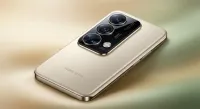
The phone also features an upgraded graphics engine and one of the largest displays in the industry. The 6.9-inch LTPO AMOLED panel boasts a unusual/high resolution of 1208 x 2624 and a high-refresh rate of 120 Hz. With peak brightness of 4,000 nits, the phone can be used outdoors even on a sunny day without any significant loss of visibility. Such properties allow avoiding the use of extreme screen protection filters that typically shorten the lifespan of organic light-emitting diodes. In the Xiaomi 18 Pro Max, the Dragon Crystal Glass 3, another considerable innovation, is used. Although the main attraction of the panel is the high resolution and extreme peak brightness, Xiaomi managed to hide another trick up its sleeve. In addition to the large 1.5K+ display, the phone has a 2.9-inch auxiliary LTPO AMOLED screen on the back cover near the camera cluster. It also has a peak brightness of 4,000 nits and a 120-pps refresh rate. As a result, users can now comfortably frame selfies with the phone’s considerable 6.9 1.5K+ or read incoming messages without having to turn the device around. Of course, for corporate users, such a feature has to be disabled in the privacy settings while on a video call.

Speaking of the large-format smartphone’s camera, Xiaomi decided to go full Leica and introduced a revolutionary set of technical solutions. Both of the phone’s 200-megapixel (MP) sensors have an enormous size of 1/1.28-inch, combined with an aperture of f/1.67 and optical stabilization (OIS). As a result, the phone’s main sensor accumulates an unprecedented amount of light, letting it produce excellent photos without needing to max out the ISO level. Contrary to popular belief, the Xiaomi 18 Pro Max’s Leica Expert Mode does not focus on noise reduction, but on the accurate reproduction of colors of human skin and the retention of contrast. Another interesting technology is the Xiaomi HyperViewfinder, which uses a neural network and the phone’s image signal processor (ISP) to process exposures. With the help of these technologies, it is now possible to achieve a short exposure when taking pictures in the street or take shots of objects with a clearly defined edge in portrait mode.

As expected, such a powerful set of technologies requires a considerable battery. Xiaomi seemingly broke the record with the battery of its latest flagship smartphone, squeezing an 8,500 milliampere-hour (mAh) silicon-carbon anode battery into the 8.4-mm thick housing. Such a decision resulted in the phone weighing between 235 and 240 grams depending on the selected color. As a result, one can no longer call the Xiaomi 18 Pro Max simply pocket-sized. In return, however, the phone will no longer require frequent charging and can easily withstand a 48-hour intense workload as a hotspot, modulating a stable connection for multiple devices.

Charging the large battery is also a priority for Xiaomi, which equips the flagship smartphone with a 100 W HyperCharge USB-C charging technology. Thus, the phone’s battery is enough for a day and a half after only one hour of charging, while the 50-W wireless charging and 27-W reverse wireless charging technologies allow transferring some of the phone’s energy to other devices. The Xiaomi 18 Pro Max runs on the latest Android 17 system, wrapped in Xiaomi’s HyperOS 4. It allows users to comfortably work with multiple windows on the 6.9-inch display. The phone also has a 12- or 16-gigabyte random-access memory (RAM) and a 512-gigabyte or 1-terabyte internal storage. The Xiaomi 18 Pro Max has everything one could possibly need: Wi-Fi 7 and Bluetooth 6.0 connectivity, an ultrasonic sensor on the fingerprint, and a dust and waterproof housing with an IP68 rating. Finally, Xiaomi offers a competitive price for the flagship model at approximately $1,045 per unit.








Discussion (Join the conversation)
No comments yet. Be the first to share your thoughts!
Please log in to leave a comment.
Login / Register