
The mobile phone hardware market undergoes a significant architectural change as ultra-slim devices get replaced with larger energy cells and multi-optic configurations. The filed documents, supply chains, and technical manuscripts concerning the forthcoming vivo V80 series smartphones, including the V80 5G and V80 Lite, suggest that the manufacturer will favor camera-oriented silicon solutions. Vivo does not plan to pursue the superficial update strategy this year as the firm reconfigures the battery management and telephoto optics for mid-range and flagship models.

A Qualcomm Snapdragon 7 Gen 4” 4nm process-based SoC powers the standard vivo V80 5G. The SoC accommodates octa-core CPU configurations, of which four cores reach 2.7 GHz. The V80 5G can sustain multiple chained computational tasks in the background while the front-end runs Android sub-systems at a heightened refresh rate. However, the sustained performance benchmarking falls short of the theoretical expectations, as the Snapdragon 7 Gen 4’s highest clocked cores reach unsafe thermal thresholds when engaged in intensive operations. Instead of conventional heat pipes, the V80 5G employs a wider vapor chamber to spread the heat more efficiently throughout the 203 g smartphone. The vivo V80 Lite, in turn, employs a MediaTek Dimensity 7360-Turbo 4nm chipset for its flagship-grade segment. The V80 Lite’s SoC utilizes an octa-core configuration, of which four CPU cores are performance-oriented, and the remaining four CPU cores are designed for continuous low-power interval tasks.

Both mobile phone variants utilize 1.5K QHD+ AMOLED boards with significantly heightened refresh rates. The smaller 6.59-inch V80 5G display accommodates a 144 Hz refresh rate that can scale down to a select set of predefined thresholds for power conservation. The V80 5G’s 1.5K AMOLED board reaches a peak brightness of 5000 nits, which enables the smartphone to remain usable outdoors, even when the user reviews documents in bright sunlight. At the same time, the 6.83-inch 3D curved AMOLED smartphone display, which the V80 Lite uses, can also reach a peak brightness of 3000 nits. Both displays utilize a high-frequency PWM regulation to reduce the flickering effect, especially when the device runs in the dark. Additionally, the blue light emission has been limited with an SGS-certified film on the display. A reinforced plastic layer on the outside of the display provides an additional safeguard, although smartphone users who engage in industrial fields need to acquire a separate case for the V80 series to prevent severe physical damage.

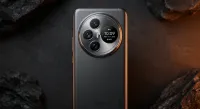
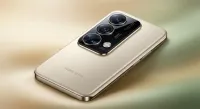
Both V80 smartphone variants utilize advanced optical configurations that cater explicitly to content creators, photojournalists, and videographers. The vivo V80 5G features an integrated Zeiss camera profile, which the firm accomplishes by utilizing a 50 MP Sony LYTIA 700V wide physical aperture sensor with an f/1.88 parameter and optical stabilization. The 50 MP computational stills and cinema-grade video capture mode generate a considerable amount of data to process, which results in heightened noise when utilizing a smartphone camera in dimly lit environments. The V80 5G, however, has a dedicated 50 MP periscope telephoto camera with an f/2.4 parameter to prevent the need for extensive cropping during the composition process. An 8 MP ultra-wide-angle camera completes the rear-facing camera triplet, and the front-facing camera comes with a substantial 50 MP resolution to enable high-resolution video conferencing.
The V80 Lite has a dedicated 50 MP Sony IMX852 optical sensor, which uses a 16:1 pixel binning technique to produce a clear image during regular daytime documentation and scanning of physical paper-based media. The 32 MP front-facing wide-angle smartphone camera enables similar operation in the front-facing configuration. The V80 Lite does not have a dedicated periscope telephoto camera, but it utilizes the computational optics to zoom in on subjects during the photography or videography process. The V80 series smartphones can shoot 4K videos on front and rear-facing cameras simultaneously in multi-view mode with the necessary set of visual effects, including the Zeiss profile and LUT tools.

The battery in the V80 series smartphones is capable of withstanding demanding applications that traditionally required high-endurance battery solutions. The 7.69 mm slim smartphone accommodates a 7200 mAh BlueVolt battery, giving the V80 5G 2 days of endurance on a single charge with LTE, 5G, and hotspot connectivity actively used in the background. Similarly, the 7.99 mm slim smartphone design combines with a 7050 mAh BlueVolt battery to achieve a similar level of performance while keeping the weight at 197 g. The V80 series smartphones utilize silicon-carbon anodes in their battery design to achieve a higher current drain without damaging the battery’s integrity. Both devices charge at a rapid rate, with the V80 5G using a 90 W wired charging solution and the V80 Lite having a 44 W wired and a 50 W bypass charging solution.
The V80 series smartphones use dual Nano-SIM 5G standby, Wi-Fi, and Bluetooth 5.4 connectivity. The smartphone uses an in-display fingerprint scanner that utilizes either ultrasonic or optical scanning, depending on the variant, to unlock the device in dusty and wet environments. Both devices utilize a set of proprietary applications to enable an enterprise-level mobile experience. The V80 series smartphones are IP68 and IP69 rated for solid-state protection against dust and water. Additionally, the V80 series smartphones utilize a stereo speaker setup to provide an immersive audio mix that is not overwhelmed by environmental sounds during regular mobile operations.

The software on the V80 series smartphones provides a substantial update over the previous iteration. The V80 Lite uses Android 16 with OriginOS 6, while the V80 5G is the first-ever V-series smartphone to use Android 17 with OriginOS 7. The V80 series smartphone software keeps background processes at bay with memory management tools that do not close essential applications, such as SSH sessions or enterprise-level VPN. As with most enterprise-level smartphones, the V80 series requires a specialist to configure the device for a particular organization, and the process of removing diagnostic and telemetry software is time-consuming.
The V80 Lite starts at approximately BDT 59,999, whereas the V80 5G starts at either ₹63,000 or higher for the 8 GB/128 GB or 256 GB/1 TB storage configurations. Vivo V80 series smartphones cater to enterprise-level smartphone users who operate in harsh environments and utilize the mobile device for multi-day operations. They value the capabilities of a high-end smartphone with heightened display brightness and an advanced set of camera options but do not want to invest in bulkier and more expensive flagship devices.



Discussion (Join the conversation)
No comments yet. Be the first to share your thoughts!
Please log in to leave a comment.
Login / Register