

| Prices | Price (USD) | USD $700.00 USD |
|---|---|---|
| Official Price | Global About 530 EUR | |
| Network | Technology |
No cellular connectivity
|
| Launch | Announced | 2025, May 22 |
| Status | Available. Released 2025, May 22 | |
| Body | Dimensions | 305.8 x 207.5 x 5.1 mm (12.04 x 8.17 x 0.20 in) |
| Weight | 609 g or 619 g (1.34 lb) | |
| Build | Glass front (Gorilla Glass 5), aluminum frame, aluminum back | |
| SIM | No | |
| Features | Stylus support (magnetic) | |
| Display | Type | AMOLED, 68B colors, 120Hz, 4800Hz PWM, Dolby Vision, HDR10+, HDR Vivid, 1600 nits (peak) |
| Size | 14.0 inches, 583.9 cm2 (~92.0% screen-to-body ratio) | |
| Resolution | 2136 x 3200 pixels, 3:2 ratio (~275 ppi density) | |
| Protection | Corning Gorilla Glass 5 | |
| Platform | OS | Android 15, HyperOS 2 |
| Chipset | Xring O1 (3 nm) | |
| CPU | 10-core (2x3.7GHz Cortex-X925 & 4x3.4GHz Cortex-A725 & 2x1.9GHz Cortex-A725 & 2x1.8GHz Cortex-A520) | |
| GPU | Immortalis-G925 MP16 | |
| Memory | Card slot | No |
| Internal | 256GB 12GB RAM, 512GB 12GB RAM, 1TB 16GB RAM | |
| Features | UFS 4.1 | |
| Main Camera | Single | 50 MP, f/1.8, (wide), 1/2.76", 0.64µm, PDAF |
| Features | LED flash, HDR, panorama | |
| Video | 4K@30/60fps, 1080p@30/60fps | |
| Selfie camera | Single | 32 MP, f/2.2, 19mm (ultrawide), 1/3.6", 0.61µm |
| Features | HDR | |
| Video | 1080p@30fps | |
| Sound | Loudspeaker | Yes, with stereo speakers (8 speakers) |
| 3.5mm jack | No | |
| Features | 24-bit/192kHz Hi-Res & Hi-Res Wireless audio | |
| Comms | WLAN | Wi-Fi 802.11 a/b/g/n/a/6/7, dual-band, Wi-Fi Direct |
| Bluetooth | 5.4, A2DP, LE, LHDC 5 | |
| Positioning | No | |
| NFC | Yes (data transfer only) | |
| Radio | No | |
| USB | USB Type-C 3.2 Gen2, OTG, accessory connector pins | |
| Infrared port | Yes | |
| Features | Sensors | Fingerprint (side-mounted), accelerometer, gyro, proximity, compass |
| Battery | Type | 12000 mAh |
| Charging |
120W wired, PD3.0 7.5W reverse wired |
|
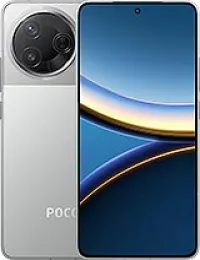
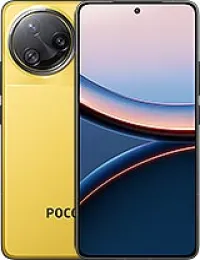
| Misc | Colors | Gray, Blue |
| Price | About 700 EUR |
Mini Review & Verdict
A smart summary of the Xiaomi Pad 7 Ultra
Advantages
- Generous visual canvas spanning 14 inches, ideal for split-screen multitasking and media consumption
- Precision stylus and active pen support tailored for digital illustration and handwriting
- Substantial 12000mAh battery reservoir offering extended hours of continuous productivity
Disadvantages
- Larger physical footprint makes comfortable one-handed operation impractical
- Rear optical camera hardware is more modest compared to contemporary smartphones
- Substantial weight requires a desk stand or folio case during prolonged viewing sessions
Engineered to deliver an expansive digital workspace, the Xiaomi Pad 7 Ultra commands attention through its slender, rigid chassis and immersive an ultra-crisp OLED canvas spanning 14 inches backed by a fluid 120Hz refresh rate. The broad aspect ratio is finely tuned for comfortable split-screen document workflows, immersive digital illustration, and high-definition multimedia playback with generous viewing angles.
Under the hood, processing horsepower is directed by the capable Xring O1 (3 nm). Demanding tasks—including 4K video rendering, multi-window productivity, and graphic-intensive mobile gaming—operate with reassuring fluidity. Precision active stylus support transforms the screen into a responsive digital sketchpad, complemented by an acoustic speaker array that produces expansive stereo separation.
Prolonged operational sessions are sustained by a hefty 12000mAh power cell, engineered to effortlessly see users through long flights, university lectures, or marathon media sessions. In conclusion, the Xiaomi Pad 7 Ultra proves to be an authoritative large-screen tablet that excels in both content creation and mobile entertainment.
User Opinions
0 ReviewsPrice History
Track price trends for Pad 7 Ultra over the last 6 months








Be the first to review!