

| Prices | Price (USD) | USD $116.58 USD |
|---|---|---|
| Network | Technology |
2G, 3G
|
| Launch | Announced | 2013, September 19 |
| Status | Available. Released 2013, September 19 | |
| Body | Weight | 200 grams |
| Height | 153 mm | |
| Width | 73.5 mm | |
| Thickness | 9.9 mm | |
| Colors | Black, White | |
| Display | Type | IPS LCD |
| Resolution | 540x9500 px | |
| Protection | Gorilla Glass | |
| Screen Size | 5.3 inches (13.462 cm) | |
| Aspect Ratio | 16:9 | |
| Bezel-less Display | Yes with notch | |
| Touch Screen | Capacitive Touchscreen, Multi-touch | |
| Platform | OS | Android |
| Chipset | MediaTek MT6589T | |
| CPU | Quad-Core 1.3GHz ARM Cortex A7 | |
| GPU | ARM Mali-400 MP1 | |
| OS Version | v4.1.2 (Jelly Bean) | |
| CPU Cores | 4 Cores | |
| Architecture | 32 bit | |
| Memory | Internal Storage | 8 GB |
| Expandable Memory | Up to 32 GB | |
| USB OTG | Yes | |
| RAM | 1 GB | |
| Main Camera | Camera Setup | Single |
| Resolution | 8 MP, Primary Camera | |
| Image Resolution | 3264 x 2448 Pixels | |
| Autofocus | Yes | |
| Flash | LED Flash | |
| Settings | Exposure compensation | |
| Zoom | Digital Zoom | |
| Shooting Modes | Continuous Shooting, High Dynamic Range mode (HDR), Burst mode, Macro Mode | |
| Video Recording | 1920x1080 | |
| Video FPS | 30 fps | |
| Video | 1920x1080 | |
| Selfie camera | Camera Setup | Single |
| Resolution | 1.3 MP, Primary Camera | |
| Video Recording | 1280x720 | |
| Video FPS | 30 fps | |
| Video | 1280x720 | |
| Sound | Loudspeaker | Yes |
| 3.5mm jack | 3.5 mm | |
| FM Radio | Yes | |
| Alert Types | Vibration; MP3, WAV ringtones | |
| Video | 1080p@30fps | |
| Document Reader | Yes | |
| Comms | WLAN | Wi-Fi 4 (802.11 b/g/n) |
| Bluetooth | v4.0 | |
| Positioning | Yes with A-GPS | |
| USB | Mass storage device, USB charging, microUSB 2.0 | |
| Wi-fi Hotspot | Yes | |
| Features | Light Sensor | Light sensor, Proximity sensor, Accelerometer |
| Battery | Type | Li-Ion (Lithium-Ion) 3000 mAh |
| Placement | Non-removable | |
| Misc | Release Date | 19 September 2013 |
| Status | Available | |
| Features | Proximity sensor, Accelerometer |
Mini Review & Verdict
A smart summary of the Walton Primo N1
Advantages
- Solid baseline hardware configuration meeting essential smartphone requirements
- User-friendly form factor with straightforward physical handling
Disadvantages
- Network capability is capped at 4G LTE speeds without native 5G bands
- Employs standard LCD panel technology rather than deep-black AMOLED
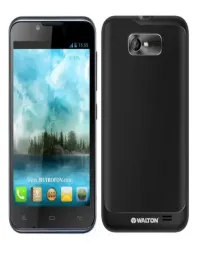
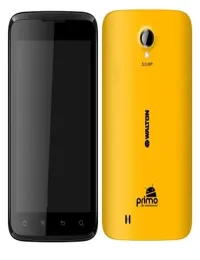
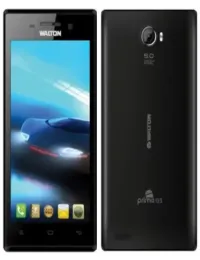
Engineered from the ground up with a focus on structural poise and industrial refinement, the Walton Primo N1 exemplifies Walton's contemporary hardware craftsmanship. The exterior is assembled with a structurally reinforced chassis, providing a rigid backbone that resists torsional stress while remaining comfortable during prolonged handheld sessions. Up front, visual interaction is commanded by a responsive IPS LCD display measuring 5.3 inches , calibrated for precise color rendition, deep contrast, and remarkable outdoor legibility.
Internal computing horsepower is governed by the MediaTek MT6589T architecture. The silicon handles heavy compute workloads, high-framerate rendering, and extensive background multitasking with robust thermal dissipation and zero perceptible UI hesitation. On the photographic front, the optics module—centered on a 8MP primary sensor—operates with disciplined exposure metering, yielding natural contrast balance and reliable detail preservation across diverse lighting scenarios.
Sustained endurance is delivered by a 3000mAh battery unit, backed by standard charging speeds designed to minimize downtime throughout grueling work schedules. With modern network support including steady 4G LTE, the Walton Primo N1 emerges as a technically accomplished, impeccably assembled device built for lasting everyday performance.
User Opinions
0 ReviewsPrice History
Track price trends for Primo N1 over the last 6 months








Be the first to review!