

| Launch | Status | Available |
|---|---|---|
| Misc | Our rating | [] |
| Pro and cons | [] | |
| General | [] | |
| Reviews/comments | [] |
Mini Review & Verdict
A smart summary of the Samsung Xiaomi Redmi Note 13 Turbo
Advantages
- Solid baseline hardware configuration meeting essential smartphone requirements
- User-friendly form factor with straightforward physical handling
Disadvantages
- Network capability is capped at 4G LTE speeds without native 5G bands
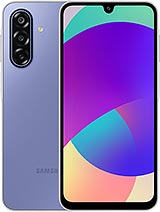
Engineered from the ground up with a focus on structural poise and industrial refinement, the Samsung Xiaomi Redmi Note 13 Turbo exemplifies Samsung's contemporary hardware craftsmanship. The exterior is assembled with a structurally reinforced chassis, providing a rigid backbone that resists torsional stress while remaining comfortable during prolonged handheld sessions. Up front, visual interaction is commanded by a responsive IPS LCD display with ample screen real estate , calibrated for precise color rendition, deep contrast, and remarkable outdoor legibility.
Internal computing horsepower is governed by the Dedicated Multi-core Processor architecture. The silicon handles heavy compute workloads, high-framerate rendering, and extensive background multitasking with robust thermal dissipation and zero perceptible UI hesitation. Acoustic output and wireless connectivity remain tightly integrated, delivering consistent signal integrity and clear voice transmission.
Sustained endurance is delivered by a well-calibrated power cell, backed by standard charging speeds designed to minimize downtime throughout grueling work schedules. With modern network support including steady 4G LTE, the Samsung Xiaomi Redmi Note 13 Turbo emerges as a technically accomplished, impeccably assembled device built for lasting everyday performance.







Be the first to review!