

| Prices | Price (USD) | USD $280.00 USD |
|---|---|---|
| Official Price | Global About 800 EUR | |
| Network | Technology |
GSM / CDMA / HSPA / LTE
|
| Launch | Announced | 2024, March |
| Status | Available. Released 2024, March | |
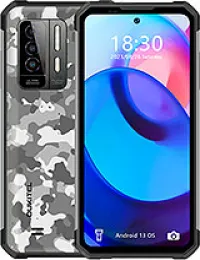
| Body | Dimensions | 265.1 x 176.7 x 15.1 mm (10.44 x 6.96 x 0.59 in) |
| Weight | 996.7 g (2.20 lb) | |
| SIM | Nano-SIM + Nano-SIM | |
| Features |
IP68/IP69K dust tight and water resistant (high pressure water jets; immersible up to 1.5m for 30 min) MIL-STD-810H compliant |
|
| Display | Type | IPS LCD, 500 nits |
| Size | 11.0 inches, 350.9 cm2 (~74.9% screen-to-body ratio) | |
| Resolution | 1200 x 1920 pixels, 16:10 ratio (~206 ppi density) | |
| Protection | Corning Gorilla Glass 5 | |
| Display | 11.0″ 1200×2000 pixels | |
| Platform | OS | Android 13 |
| Chipset | Mediatek Helio G99 (6 nm) | |
| CPU | Octa-core (2x2.2 GHz Cortex-A76 & 6x2.0 GHz Cortex-A55) | |
| GPU | Mali-G57 MC2 | |
| Memory | Card slot | microSDXC (uses shared SIM slot) |
| Internal |
256GB 6GB RAM 256 GB |
|
| Features | UFS 2.2 | |
| RAM | 6 GB | |
| Main Camera | Triple |
48 MP, f/1.8, (wide), 1/2", PDAF 20 MP, f/1.8, (night vision), 1/2.78", AF, infrared night vision lights 5 MP (macro) |
| Features | LED flash, HDR, panorama | |
| Video | 1440p@30fps, 1080p@30fps | |
| Selfie camera | Single | 32 MP, f/2.2, (wide), 1/2.8" |
| Features | HDR | |
| Video | 1080p@30fps | |
| Sound | Loudspeaker | Yes, with stereo speakers (4 speakers) |
| 3.5mm jack | No | |
| Comms | WLAN | Wi-Fi 802.11 a/b/g/n/ac, dual-band |
| Bluetooth | 5.1, A2DP, LE | |
| Positioning | GPS, GLONASS, GALILEO, BDS | |
| NFC | Yes | |
| Radio |
FM radio No |
|
| USB | USB Type-C 2.0, OTG | |
| Features | Sensors | Accelerometer, gyro, proximity, compass |
| Battery | Type | Li-Po 20000 mAh |
| Charging |
33W wired Reverse wired |
|
| Misc | Colors |
Black, Black/Orange Gray, Green, Purple |
| Price | About 280 EUR | |
| Global price | $300 / €275 | |
| Others | IP68/69K with MIL-STD-810HStylus support | |
| Made by | China | |
| EU LABEL | Energy | Class B |
| Battery | 499:59h endurance, 1000 cycles | |
| Free fall | Class A (208 falls) | |
| Repairability | Class C |
Mini Review & Verdict
A smart summary of the Oukitel RT8
Advantages
- Generous visual canvas spanning 11 inches, ideal for split-screen multitasking and media consumption
- Precision stylus and active pen support tailored for digital illustration and handwriting
- Substantial 20000mAh battery reservoir offering extended hours of continuous productivity
Disadvantages
- Larger physical footprint makes comfortable one-handed operation impractical
- Rear optical camera hardware is more modest compared to contemporary smartphones
- Substantial weight requires a desk stand or folio case during prolonged viewing sessions
Engineered to deliver an expansive digital workspace, the Oukitel RT8 commands attention through its slender, rigid chassis and immersive a spacious, high-resolution display panel spanning 11 inches . The broad aspect ratio is finely tuned for comfortable split-screen document workflows, immersive digital illustration, and high-definition multimedia playback with generous viewing angles.
Under the hood, processing horsepower is directed by the capable Mediatek Helio G99 (6 nm). Demanding tasks—including 4K video rendering, multi-window productivity, and graphic-intensive mobile gaming—operate with reassuring fluidity. Precision active stylus support transforms the screen into a responsive digital sketchpad, complemented by an acoustic speaker array that produces expansive stereo separation.
Prolonged operational sessions are sustained by a hefty 20000mAh power cell, engineered to effortlessly see users through long flights, university lectures, or marathon media sessions. In conclusion, the Oukitel RT8 proves to be an authoritative large-screen tablet that excels in both content creation and mobile entertainment.
User Opinions
0 ReviewsPrice History
Track price trends for RT8 over the last 6 months





Be the first to review!