
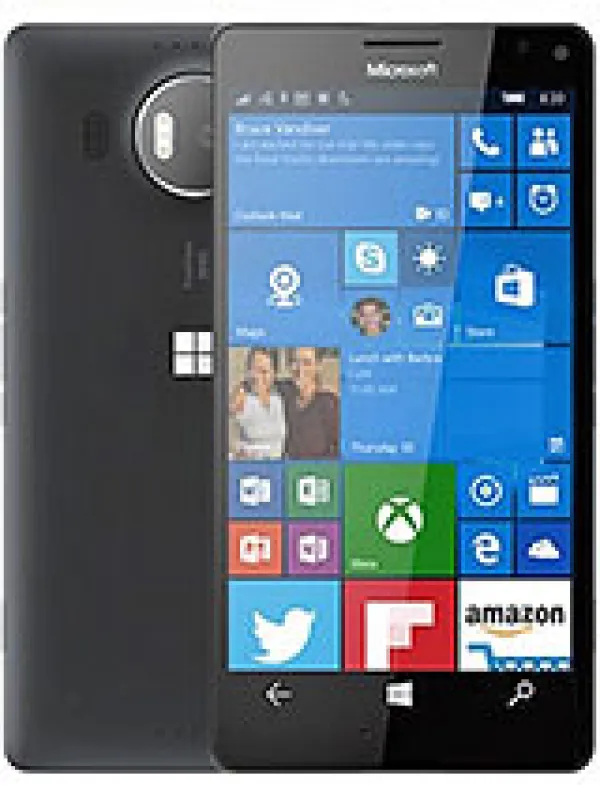
| Prices | Price (USD) | USD $350.00 USD |
|---|---|---|
| Network | Technology |
GSM / HSPA / LTE
|
| Launch | Announced | 2015, October. Released 2015, December |
| Status | Discontinued | |
| Body | Dimensions | 151.9 x 78.4 x 8.1 mm (5.98 x 3.09 x 0.32 in) |
| Weight | 165 g (5.82 oz) | |
| SIM | Nano-SIM + Nano-SIM | |
| Display | Type | AMOLED |
| Size | 5.7 inches, 89.6 cm2 (~75.2% screen-to-body ratio) | |
| Resolution | 1440 x 2560 pixels, 16:9 ratio (~515 ppi density) | |
| Protection | Corning Gorilla Glass 4 | |
| Features | ClearBlack display | |
| Platform | OS | Microsoft Windows 10 |
| Chipset | Qualcomm MSM8994 Snapdragon 810 (20 nm) | |
| CPU | Octa-core (4x1.5 GHz Cortex-A53 & 4x2.0 GHz Cortex-A57) | |
| GPU | Adreno 430 | |
| Memory | Card slot | microSDXC (dedicated slot) |
| Internal | 32GB 3GB RAM | |
| Features | eMMC 5.0 | |
| Main Camera | Single | 20 MP, f/1.9, 26mm (wide), 1/2.4", 1.12µm, AF, OIS |
| Features | Zeiss optics, triple-LED RGB flash, panorama, HDR | |
| Video | 4K@30fps, stereo sound rec., 1080p@30/60fps (after SW update) | |
| Selfie camera | Single | 5 MP, f/2.4 |
| Features | No | |
| Video | 1080p@30fps | |
| Sound | Loudspeaker | Yes |
| 3.5mm jack | Yes | |
| Comms | WLAN | Wi-Fi 802.11 a/b/g/n/ac, dual-band, hotspot |
| Bluetooth | 4.1, A2DP | |
| Positioning | GPS, GLONASS, BDS | |
| NFC | Yes | |
| Radio | FM radio | |
| USB | USB Type-C 3.1 | |
| Features | Sensors | Iris scanner, accelerometer, gyro, proximity, compass, barometer, sensor core |
| Features | Microsoft Continuum support | |
| Battery | Type | Li-Ion 3340 mAh, removable |
| Charging |
18W wired Wireless (Qi) (market dependent) |
|
| Stand-by | Up to 288 h (2G) / Up to 288 h (3G) | |
| Talk time | Up to 25 h (2G) / Up to 19 h (3G) | |
| Music play | Up to 75 h | |
| Misc | Colors | Black, White |
| Price | About 350 EUR | |
| Our Tests | Performance |
Basemark OS II 2.0: 1472 Basemark X: 32178 |
| Display | Contrast ratio: Infinite (nominal), 3.837 (sunlight) | |
| Loudspeaker | Voice 74dB / Noise 75dB / Ring 84dB | |
| Audio quality | Noise -91.6dB / Crosstalk -89.3dB | |
| Battery (old) | Endurance rating 47h |
Mini Review & Verdict
A smart summary of the Microsoft Lumia 950 XL Dual SIM
Advantages
- Luminous AMOLED panel engineered for vivid color accuracy and outdoor readability
- Dependable daily multitasking and gaming stability powered by Qualcomm MSM8994 Snapdragon 810 (20 nm)
- Convenient wireless charging capability for cord-free desk replenishment
- Convenient 3.5mm analog headphone port for zero-latency wired audio
Disadvantages
- Network capability is capped at 4G LTE speeds without native 5G bands
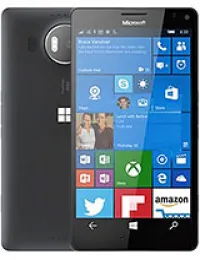
In real-world daily practice, the Microsoft Lumia 950 XL Dual SIM immediately distinguishes itself through balanced ergonomics, tactile button feedback, and approachable pocketability within Microsoft's mobile lineup. The front panel features a vibrant AMOLED measuring 5.7 inches , ensuring that reading articles, streaming media, and navigating social feeds remain fluid, vibrant, and remarkably gentle on the eyes.
Everyday software responsiveness is driven by the capable Qualcomm MSM8994 Snapdragon 810 (20 nm). Routine app launches, web browsing sessions, and casual gaming are handled with dependable stability and efficient thermal behavior. For photography enthusiasts, the main camera setup—centered on a 20MP primary sensor with optical image stabilization (OIS)—proves ready to document daily memories with lively color science, snappy shutter response, and commendable sharpness.
Power autonomy is reliably anchored by a 3340mAh battery unit, backed by standard charging speeds alongside wireless charging convenience to comfortably see users through from morning commutes to late evening unwinding. In essence, the Microsoft Lumia 950 XL Dual SIM strikes a sensible, well-rounded balance that nails fundamental smartphone essentials without unnecessary operational complexity.
User Opinions
0 ReviewsPrice History
Track price trends for Lumia 950 XL Dual SIM over the last 6 months






Be the first to review!