

| Prices | Price (USD) | USD $1,550.00 USD |
|---|---|---|
| Network | Technology |
GSM / CDMA / HSPA / CDMA2000 / LTE / 5G
|
| Launch | Announced | 2023, September 25 |
| Status | Available. Released 2023, September 28 | |
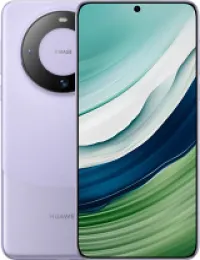
| Body | Dimensions | 163.7 x 79 x 8.1 mm (6.44 x 3.11 x 0.32 in) |
| Weight | 242 g or 246 g (8.54 oz) | |
| Build | Glass front, glass back, aluminum frame | |
| SIM | Hybrid Dual SIM (Nano-SIM, dual stand-by) | |
| Features | IP68 dust tight and water resistant (immersible up to 6m for 30 min) | |
| Display | Type | LTPO OLED, 1B colors, 120Hz |
| Size | 6.82 inches, 114.4 cm2 (~88.5% screen-to-body ratio) | |
| Resolution | 1260 x 2720 pixels, 19.5:9 ratio (~440 ppi density) | |
| Protection | Huawei Kunlun Glass 2 | |
| Display | 6.82″1260×2720 pixels | |
| Platform | OS | HarmonyOS 4.0 (China) |
| Chipset | Kirin 9000S (7 nm) | |
| CPU | Octa-core (1x2.62 GHz Taishan Big & 3x2.15 GHz Taishan Mid & 4x1.53GHz Cortex-A510) | |
| GPU | Maleoon 910 MP4 | |
| Memory | Card slot | NM (Nano Memory), up to 256GB (uses shared SIM slot) |
| Internal |
512GB 16GB RAM, 1TB 16GB RAM 512 GB / 1TB |
|
| Features | UFS 3.1 | |
| RAM | 16 GB | |
| Main Camera | Triple | 48 MP, f/1.4-f/4.0, 24mm (wide), PDAF, Laser AF, OIS48 MP, f/3.0, 90mm (periscope telephoto), PDAF, OIS, 3.5x optical zoom40 MP, f/2.2, 13mm, 120˚ (ultrawide), PDAF |
| Features | Laser AF, color spectrum sensor, LED flash, panorama, HDR | |
| Video | 4K@30/60fps, 1080p@30/60/120/240/480fps, 720p@960fps, 720p@3840fps, HDR Vivid, gyro-EIS | |
| Selfie camera | Single | 13 MP, f/2.4, 18mm (ultrawide) TOF 3D, (depth/biometrics sensor) |
| Features | HDR, panorama | |
| Video | 4K@30/60fps, 1080p@30/60/240fps, HDR Vivid | |
| Sound | Loudspeaker | Yes, with stereo speakers |
| 3.5mm jack | No 32-bit/384kHz audio | |
| Features | 32-bit/384kHz audio | |
| Comms | WLAN | Wi-Fi 802.11 a/b/g/n/ac/6, dual-band, Wi-Fi Direct, hotspot |
| Bluetooth | 5.2, A2DP, LE | |
| Positioning | GPS (L1+L5), GLONASS (L1), BDS (B1I+B1c+B2a+B2b), GALILEO (E1+E5a+E5b), QZSS (L1+L5), NavIC (L5) | |
| NFC | Yes | |
| Radio | No | |
| USB | USB Type-C 3.1, OTG, Display Port 1.2 | |
| Infrared port | Yes | |
| Features | Sensors | Face ID, fingerprint (under display, optical), accelerometer, gyro, proximity, barometer, compass, color spectrumBDS Satellite Calling and Message |
| Features | BDS Satellite Calling and Messaging - China only | |
| Messaging | SMS(threaded view), MMS, Email, Push Email, IM | |
| Browser | HTML5 | |
| Battery | Type | Non-removable Li-Po 5000 mAh |
| Charging | 88W wired, 100% in 30 min (advertised)50W wireless20W reverse wireless | |
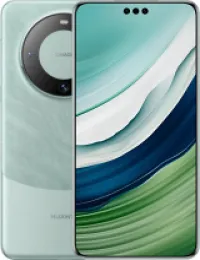
| Misc | Colors | Black, Red |
| Models | ALN-AL10 | |
| Price | About 1550 EUR | |
| Others | IP68 dust/water resistant (up to 6m for 30 min) | |
| Alert types | Vibration, MP3, WAV ringtones | |
| Java | No | |
| Made by | China |
Mini Review & Verdict
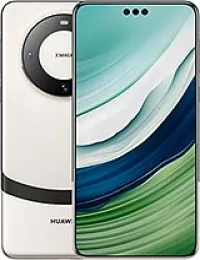
A smart summary of the Huawei Mate 60 RS Ultimate
Advantages
- Ultra-fast 5G connectivity for swift downloads and low-latency streaming
- High-contrast LTPO AMOLED screen with punchy saturation and smooth motion with fluid 120Hz refresh rate
- High-detail 48MP primary camera sensor backed by Optical Image Stabilization (OIS)
- Dedicated telephoto optical zoom lens for crisp distant portrait and telephoto captures
- Speedy 88W wired fast charging for rapid battery top-ups
Disadvantages
- Omission of a 3.5mm headphone jack (requires Type-C adapter or wireless audio)
- Fixed internal storage configuration without expandable MicroSD card support
Arriving with an assertive focus on market competitiveness, the Huawei Mate 60 RS Ultimate enters the mobile landscape offering a compelling hardware package tailored to deliver maximum return on investment. The device commands visual attention through its modern LTPO AMOLED panel measuring 6.82 inches paired with an energetic 120Hz refresh rate, which brings punchy saturation, deep blacks, and excellent dynamic range to a competitive tier.
At the engine room of the device, processing duties are commanded by the energetic Kirin 9000S (7 nm). This configuration provides ample headroom for fluid split-screen multitasking, responsive touch polling, and smooth graphical transitions across daily applications. Imaging requirements are addressed by an agile primary camera—centered on a 48MP primary sensor with optical image stabilization (OIS) and dedicated optical zoom versatility—yielding clean, share-worthy captures with respectable dynamic range and accurate white balance.
Battery longevity is secured through a well-calibrated power cell, equipped with 88W rapid charging alongside wireless charging convenience to ensure users spend more time active and less time anchored to wall outlets. When evaluated against rival contemporaries, the Huawei Mate 60 RS Ultimate presents an undeniable value proposition that punches well above its weight class.
User Opinions
0 ReviewsPrice History
Track price trends for Mate 60 RS Ultimate over the last 6 months







Be the first to review!