
Compare Phones
Search and select devices to compare
 Samsung Galaxy S24 Ultra |
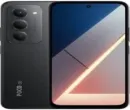 Xiaomi Poco M8s |
|
|---|---|---|
| Price (USD) | $507.90 | $160.00 |
| Network | ||
| Technology | GSM / CDMA / HSPA / EVDO / LTE / 5G | GSM / HSPA / LTE / 5G |
| 2G bands | GSM 850 / 900 / 1800 / 1900 | GSM 850 / 900 / 1800 / 1900 |
| 3G bands | HSDPA 850 / 900 / 1700(AWS) / 1900 / 2100 | HSDPA 800 / 850 / 900 / 1700(AWS) / 1900 / 2100 |
| 4G bands | 1, 2, 3, 4, 5, 7, 8, 12, 13, 17, 18, 19, 20, 25, 26, 28, 32, 38, 39, 40, 41, 66 - International | 1, 2, 3, 4, 5, 7, 8, 12, 13, 17, 18, 19, 20, 26, 28, 32, 38, 40, 41, 42, 48, 66, 71 |
| 5G bands | 1, 2, 3, 5, 7, 8, 12, 20, 25, 26, 28, 38, 40, 41, 66, 75, 77, 78 SA/NSA/Sub6 - International | 1, 2, 3, 5, 7, 8, 12, 20, 26, 28, 38, 40, 41, 48, 66, 71, 77, 78 SA/NSA |
| Speed | HSPA, LTE (CA), 5G | HSPA, LTE, 5G |
| Launch | ||
| Announced | 2024, January 17 | 2026, April 21 |
| Status | Available. Released 2024, January 24 | Available. Released 2026, April 21 |
| Body | ||
| Dimensions | 162.3 x 79 x 8.6 mm (6.39 x 3.11 x 0.34 in) | 169.4 x 80.4 x 8.4 mm (6.67 x 3.17 x 0.33 in) |
| Weight | 232 g or 233 g (8.18 oz) | 217 g (7.65 oz) |
| Build | Glass front (Corning Gorilla Armor), glass back (Corning Gorilla Armor), titanium frame (grade 2) | Glass front, plastic frame, plastic back |
| SIM | · Nano-SIM + Nano-SIM + eSIM + eSIM (max 2 at a time) - INT · Nano-SIM + eSIM + eSIM (max 2 at a time) - USA · Nano-SIM + Nano-SIM - CN | Nano-SIM + Nano-SIM |
| Features | IP68 dust tight and water resistant (immersible up to 1.5m for 30 min) Stylus (Bluetooth integration, accelerometer, gyro) | IP64 dust tight and water resistant |
| Display | ||
| Type | Dynamic LTPO AMOLED 2X, 120Hz, HDR10+, 2600 nits (peak) | AMOLED, 144Hz, 700 nits (typ), 850 nits (peak) |
| Size | 6.8 inches, 113.5 cm2 (~88.5% screen-to-body ratio) | 6.9 inches, 116.9 cm2 (~85.8% screen-to-body ratio) |
| Resolution | 1440 x 3120 pixels, 19.5:9 ratio (~505 ppi density) | 1080 x 2392 pixels, 19.5:9 ratio (~374 ppi density) |
| Protection | Corning Gorilla Armor | - |
| Features | DX anti-reflective coating | - |
| Platform | ||
| OS | Android 14, up to 7 major OS updates, One UI 8.5 | Android 15, HyperOS 2 |
| Chipset | Qualcomm SM8650-AC Snapdragon 8 Gen 3 (4 nm) | Qualcomm SM6375 Snapdragon 6s Gen 3 (6 nm) |
| CPU | 8-core (1x3.39GHz Cortex-X4 & 3x3.1GHz Cortex-A720 & 2x2.9GHz Cortex-A720 & 2x2.2GHz Cortex-A520) | Octa-core (2x2.3 GHz Cortex-A78 & 6x2.0 GHz Cortex-A55) |
| GPU | Adreno 750 (1 GHz) | Adreno |
| Memory | ||
| Card slot | No | microSDXC (uses shared SIM slot) |
| Internal | 256GB 12GB RAM, 512GB 12GB RAM, 1TB 12GB RAM | 128GB 6GB RAM, 256GB 8GB RAM |
| Features | UFS 4.0 | UFS 2.2 |
| Main Camera | ||
| Quad | 200 MP, f/1.7, 24mm (wide), 1/1.3", 0.6µm, multi-directional PDAF, OIS 10 MP, f/2.4, 67mm (telephoto), 1/3.52", 1.12µm, PDAF, OIS, 3x optical zoom 50 MP, f/3.4, 111mm (periscope telephoto), 1/2.52", 0.7µm, PDAF, OIS, 5x optical zoom 12 MP, f/2.2, 13mm, 120˚ (ultrawide), 1/2.55", 1.4µm, dual pixel PDAF, Super Steady video | - |
| Features | Laser AF, LED flash, auto-HDR, panorama | LED flash, HDR |
| Video | 8K@24/30fps, 4K@30/60/120fps, 1080p@30/60/120/240fps, HDR10+, stereo sound rec., gyro-EIS | 1080p@30fps |
| Dual | - | 50 MP, f/1.8, (wide), PDAF Auxiliary lens |
| Selfie camera | ||
| Single | 12 MP, f/2.2, 26mm (wide), 1/3.2", 1.12µm, dual pixel PDAF | 8 MP, f/2.0, (wide) |
| Features | HDR, HDR10+ | HDR |
| Video | 4K@30/60fps, 1080p@30fps | 1080p@30fps |
| Sound | ||
| Loudspeaker | Yes, with stereo speakers | Yes, with stereo speakers (with Dolby Atmos) |
| 3.5mm jack | No | No |
| Features | High-bitrate audio support | - |
| Comms | ||
| WLAN | Wi-Fi 802.11 a/b/g/n/ac/6e/7, tri-band, Wi-Fi Direct | Wi-Fi, dual-band, Wi-Fi Direct |
| Bluetooth | 5.3, A2DP, LE | 5.1, A2DP, LE |
| Positioning | GPS, GLONASS, BDS, GALILEO, QZSS | GPS, GALILEO, GLONASS, BDS |
| NFC | Yes | Yes |
| Radio | No | No |
| USB | USB Type-C 3.2, DisplayPort 1.2, OTG | USB Type-C 2.0, OTG |
| Infrared port | - | Yes |
| Features | ||
| Sensors | Fingerprint (under display, ultrasonic), accelerometer, gyro, proximity, compass, barometer | Fingerprint (side-mounted), accelerometer, gyro, compass |
| Features | Samsung DeX, Samsung Wireless DeX (desktop experience support) Ultra Wideband (UWB) support | Virtual proximity sensor |
| Battery | ||
| Type | Li-Ion 5000 mAh | Si/C Li-Ion 7000 mAh |
| Charging | 45W wired, PD3.0, 65% in 30 min 15W wireless (Qi) 4.5W reverse wireless | 33W wired 18W reverse wired |
| Misc | ||
| Colors | Titanium Black, Titanium Gray, Titanium Violet, Titanium Yellow, Titanium Blue, Titanium Green, Titanium Orange | Black, White |
| Models | SM-S928B, SM-S928B/DS, SM-S928U, SM-S928U1, SM-S928W, SM-S928N, SM-S9280, SM-S928E, SM-S928E/DS | - |
| SAR | 1.26 W/kg (head) 0.62 W/kg (body) | - |
| SAR EU | 1.06 W/kg (head) 1.30 W/kg (body) | - |
| Price | $ 507.90 / € 573.22 / £ 494.00 / ₹ 104,999 | About 160 EUR |
| Our Tests | ||
| Performance | AnTuTu: 1453497 (v9), 1823822 (v10) GeekBench: 7076 (v6) 3DMark: 4983 (Wild Life Extreme) | - |
| Display | 1447 nits max brightness (measured) | - |
| Camera | Photo / Video | - |
| Loudspeaker | -24.6 LUFS (Very good) | - |
| Battery | Active use score 13:49h | - |
| Win | Performance | — |
| Win | Display | — |
| Win | Camera | — |
| — | Battery | Win |
| Win | Charging | — |
| Win | RAM | — |
| — | 5G | — |
| — | Price | Win |
- Adaptive LTPO display technology optimizing power efficiency
- Higher-tier Qualcomm SM8650-AC Snapdragon 8 Gen 3 (4 nm) processor offering substantial compute superiority
- Dedicated telephoto optical zoom lens for crisp distant shots (missing on Poco M8s)
- Optical Image Stabilization (OIS) for superior low-light and steady video
- Higher-resolution 200MP main camera (150MP advantage vs Poco M8s)
- Smaller 5000mAh battery capacity (-2000mAh deficit vs Poco M8s)
- Larger 7000mAh battery reservoir (2000mAh more capacity than Galaxy S24 Ultra)
- Moderate processing ceiling compared to the high-performance chip in Galaxy S24 Ultra
- Lower primary camera resolution (50MP vs 200MP on Galaxy S24 Ultra)
This head-to-head comparison between the Samsung Galaxy S24 Ultra and Xiaomi Poco M8s pits two competitive offerings against each other to evaluate performance ceilings, display prowess, and stamina.
In terms of compute horsepower and raw silicon throughput, the Samsung Galaxy S24 Ultra commands an evident lead with its Qualcomm SM8650-AC Snapdragon 8 Gen 3 (4 nm) architecture. Heavy multitasking, high-framerate 3D graphics, and sustained processor-intensive applications operate with smoother frame rates and superior thermal composure compared to the Qualcomm SM6375 Snapdragon 6s Gen 3 (6 nm) inside the Xiaomi Poco M8s.
On the visual front, the Samsung Galaxy S24 Ultra establishes an advantage with its vibrant LTPO AMOLED panel at 120Hz. It yields richer saturation, deeper contrast ratios, and superior outdoor sunlight legibility compared to the AMOLED display at 144Hz on the Xiaomi Poco M8s.
Photographic versatility is led by the Samsung Galaxy S24 Ultra. Its 200MP primary setup with OIS stabilization and dedicated optical zoom versatility captures superior dynamic range, sharper micro-textures, and more dependable low-light exposures than the 50MP setup on the Xiaomi Poco M8s.
Power endurance and charging turnaround lean toward the Samsung Galaxy S24 Ultra, pairing a 5000mAh battery with 45W recharging to ensure lower downtime between intensive usage cycles compared to 7000mAh (33W) on the Xiaomi Poco M8s.
Overall Verdict: The Samsung Galaxy S24 Ultra emerges as our recommended champion in this matchup, clinching 5 category wins against 2 for the Xiaomi Poco M8s. Users seeking superior overall balance, higher-tier performance, and refined hardware polish will find the Samsung Galaxy S24 Ultra to be the more complete package.


