
Compare Phones
Search and select devices to compare
 Samsung Galaxy S24 Ultra |
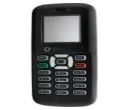 Vodafone 250 |
|
|---|---|---|
| Price (USD) | $507.90 | $10.00 |
| Network | ||
| Technology | GSM / CDMA / HSPA / EVDO / LTE / 5G | GSM |
| 2G bands | GSM 850 / 900 / 1800 / 1900 | GSM 900 / 1800 |
| GPRS | - | No |
| EDGE | - | No |
| 3G bands | HSDPA 850 / 900 / 1700(AWS) / 1900 / 2100 | - |
| 4G bands | 1, 2, 3, 4, 5, 7, 8, 12, 13, 17, 18, 19, 20, 25, 26, 28, 32, 38, 39, 40, 41, 66 - International | - |
| 5G bands | 1, 2, 3, 5, 7, 8, 12, 20, 25, 26, 28, 38, 40, 41, 66, 75, 77, 78 SA/NSA/Sub6 - International | - |
| Speed | HSPA, LTE (CA), 5G | - |
| Launch | ||
| Announced | 2024, January 17 | 2010, February. Released 2010, February |
| Status | Available. Released 2024, January 24 | Discontinued |
| Body | ||
| Dimensions | 162.3 x 79 x 8.6 mm (6.39 x 3.11 x 0.34 in) | - |
| Weight | 232 g or 233 g (8.18 oz) | - |
| SIM | · Nano-SIM + Nano-SIM + eSIM + eSIM (max 2 at a time) - INT · Nano-SIM + eSIM + eSIM (max 2 at a time) - USA · Nano-SIM + Nano-SIM - CN | Mini-SIM |
| Features | IP68 dust tight and water resistant (immersible up to 1.5m for 30 min) Stylus (Bluetooth integration, accelerometer, gyro) | Flashlight |
| Build | Glass front (Corning Gorilla Armor), glass back (Corning Gorilla Armor), titanium frame (grade 2) | - |
| Display | ||
| Type | Dynamic LTPO AMOLED 2X, 120Hz, HDR10+, 2600 nits (peak) | CSTN, 65K colors |
| Size | 6.8 inches, 113.5 cm2 (~88.5% screen-to-body ratio) | 1.45 inches, 6.8 cm2 |
| Resolution | 1440 x 3120 pixels, 19.5:9 ratio (~505 ppi density) | 128 x 128 pixels, 1:1 ratio (~125 ppi density) |
| Protection | Corning Gorilla Armor | - |
| Features | DX anti-reflective coating | - |
| Platform | ||
| OS | Android 14, up to 7 major OS updates, One UI 8.5 | Android 9.0 (Pie), EMUI 9.1 |
| Chipset | Qualcomm SM8650-AC Snapdragon 8 Gen 3 (4 nm) | Kirin 810 (7 nm) |
| CPU | 8-core (1x3.39GHz Cortex-X4 & 3x3.1GHz Cortex-A720 & 2x2.9GHz Cortex-A720 & 2x2.2GHz Cortex-A520) | Octa-core (2x2.27 GHz Cortex-A76 & 6x1.88 GHz Cortex-A55) |
| GPU | Adreno 750 (1 GHz) | Mali-G52 MP6 |
| Memory | ||
| Card slot | No | No |
| Internal | 256GB 12GB RAM, 512GB 12GB RAM, 1TB 12GB RAM | No |
| Phonebook | - | 100 entries |
| Call records | - | Yes |
| Features | UFS 4.0 | - |
| Main Camera | ||
| Features | Laser AF, LED flash, auto-HDR, panorama | No |
| Quad | 200 MP, f/1.7, 24mm (wide), 1/1.3", 0.6µm, multi-directional PDAF, OIS 10 MP, f/2.4, 67mm (telephoto), 1/3.52", 1.12µm, PDAF, OIS, 3x optical zoom 50 MP, f/3.4, 111mm (periscope telephoto), 1/2.52", 0.7µm, PDAF, OIS, 5x optical zoom 12 MP, f/2.2, 13mm, 120˚ (ultrawide), 1/2.55", 1.4µm, dual pixel PDAF, Super Steady video | - |
| Video | 8K@24/30fps, 4K@30/60/120fps, 1080p@30/60/120/240fps, HDR10+, stereo sound rec., gyro-EIS | - |
| Selfie camera | ||
| Single | 12 MP, f/2.2, 26mm (wide), 1/3.2", 1.12µm, dual pixel PDAF | 32 MP, f/2.0, 26mm (wide), 1/2.8", 0.8µm |
| Features | HDR, HDR10+ | HDR |
| Video | 4K@30/60fps, 1080p@30fps | 1080p@30fps |
| Sound | ||
| Loudspeaker | Yes, with stereo speakers | Yes |
| 3.5mm jack | No | No |
| Features | High-bitrate audio support | - |
| Comms | ||
| WLAN | Wi-Fi 802.11 a/b/g/n/ac/6e/7, tri-band, Wi-Fi Direct | No |
| Bluetooth | 5.3, A2DP, LE | No |
| Positioning | GPS, GLONASS, BDS, GALILEO, QZSS | No |
| Radio | No | FM radio |
| USB | USB Type-C 3.2, DisplayPort 1.2, OTG | miniUSB (charging only) |
| NFC | Yes | - |
| Features | ||
| Features | Samsung DeX, Samsung Wireless DeX (desktop experience support) Ultra Wideband (UWB) support | Organizer Voice memo |
| Messaging | - | SMS |
| Browser | - | No |
| Games | - | Yes |
| Java | - | No |
| Sensors | Fingerprint (under display, ultrasonic), accelerometer, gyro, proximity, compass, barometer | - |
| Battery | ||
| Type | Li-Ion 5000 mAh | Removable Li-Ion 500 mAh battery |
| Stand-by | - | Up to 400 h |
| Talk time | - | Up to 5 h |
| Charging | 45W wired, PD3.0, 65% in 30 min 15W wireless (Qi) 4.5W reverse wireless | - |
| Misc | ||
| Colors | Titanium Black, Titanium Gray, Titanium Violet, Titanium Yellow, Titanium Blue, Titanium Green, Titanium Orange | Black, Grey-Blue |
| Price | $ 507.90 / € 573.22 / £ 494.00 / ₹ 104,999 | About 10 EUR |
| Models | SM-S928B, SM-S928B/DS, SM-S928U, SM-S928U1, SM-S928W, SM-S928N, SM-S9280, SM-S928E, SM-S928E/DS | - |
| SAR | 1.26 W/kg (head) 0.62 W/kg (body) | - |
| SAR EU | 1.06 W/kg (head) 1.30 W/kg (body) | - |
| Our Tests | ||
| Performance | AnTuTu: 1453497 (v9), 1823822 (v10) GeekBench: 7076 (v6) 3DMark: 4983 (Wild Life Extreme) | - |
| Display | 1447 nits max brightness (measured) | - |
| Camera | Photo / Video | - |
| Loudspeaker | -24.6 LUFS (Very good) | - |
| Battery | Active use score 13:49h | - |
| Win | Performance | — |
| Win | Display | — |
| Win | Camera | — |
| Win | Battery | — |
| Win | Charging | — |
| — | RAM | — |
| Win | 5G | — |
| — | Price | Win |
- Future-proof 5G network connectivity (limited to 4G on 250)
- Adaptive LTPO display technology optimizing power efficiency
- Fluid 120Hz refresh rate providing much smoother motion than 250's 60Hz
- Higher-tier Qualcomm SM8650-AC Snapdragon 8 Gen 3 (4 nm) processor offering substantial compute superiority
- Larger 5000mAh battery reservoir (4500mAh more capacity than 250)
- Premium flagship price tier represents a notable financial investment
- Balanced hardware configuration tailored for reliable everyday operation
- Ergonomic physical construction with comfortable in-hand grip
- Limited to 4G LTE cellular data speeds without 5G support
- IPS LCD screen lacks the deep contrast and saturation of Galaxy S24 Ultra's OLED
- Screen refresh rate capped at 60Hz (less fluid than Galaxy S24 Ultra's 120Hz)
Both the Samsung Galaxy S24 Ultra and the Vodafone 250 arrive with distinct engineering philosophies. Our head-to-head evaluation breaks down how each contender performs across critical daily benchmarks.
In terms of compute horsepower and raw silicon throughput, the Samsung Galaxy S24 Ultra commands an evident lead with its Qualcomm SM8650-AC Snapdragon 8 Gen 3 (4 nm) architecture. Heavy multitasking, high-framerate 3D graphics, and sustained processor-intensive applications operate with smoother frame rates and superior thermal composure compared to the Kirin 810 (7 nm) inside the Vodafone 250.
On the visual front, the Samsung Galaxy S24 Ultra establishes an advantage with its vibrant LTPO AMOLED panel at 120Hz. It yields richer saturation, deeper contrast ratios, and superior outdoor sunlight legibility compared to the IPS LCD display on the Vodafone 250.
Power endurance and charging turnaround lean toward the Samsung Galaxy S24 Ultra, pairing a 5000mAh battery with 45W recharging to ensure lower downtime between intensive usage cycles compared to 500mAh (standard) on the Vodafone 250.
Overall Verdict: The Samsung Galaxy S24 Ultra emerges as our recommended champion in this matchup, clinching 6 category wins against 1 for the Vodafone 250. Users seeking superior overall balance, higher-tier performance, and refined hardware polish will find the Samsung Galaxy S24 Ultra to be the more complete package.


