
Compare Phones
Search and select devices to compare
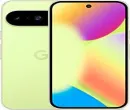 Google Pixel 10 |
 Samsung Galaxy S24 Ultra |
|
|---|---|---|
| Price (USD) | $498.00 | $507.90 |
| Network | ||
| Technology | GSM / HSPA / LTE / 5G | GSM / CDMA / HSPA / EVDO / LTE / 5G |
| 2G bands | GSM 850 / 900 / 1800 / 1900 | GSM 850 / 900 / 1800 / 1900 |
| 3G bands | HSDPA 800 / 850 / 900 / 1700(AWS) / 1900 / 2100 | HSDPA 850 / 900 / 1700(AWS) / 1900 / 2100 |
| 4G bands | 1, 2, 3, 4, 5, 7, 8, 12, 13, 14, 17, 18, 19, 20, 21, 25, 26, 29, 30, 30, 32, 38, 39, 40 , 41, 42, 48, 66, 71, 75 - GK2MP | 1, 2, 3, 4, 5, 7, 8, 12, 13, 17, 18, 19, 20, 25, 26, 28, 32, 38, 39, 40, 41, 66 - International |
| 5G bands | 1, 2, 3, 5, 7, 8, 12, 14, 20, 25, 26, 28, 38, 40, 46, 71, 75, 76, 77, 78, 79 SA/NSA/Sub6 - GK2MP | 1, 2, 3, 5, 7, 8, 12, 20, 25, 26, 28, 38, 40, 41, 66, 75, 77, 78 SA/NSA/Sub6 - International |
| Speed | HSPA, LTE (CA), 5G | HSPA, LTE (CA), 5G |
| Launch | ||
| Announced | 2025, August 20 | 2024, January 17 |
| Status | Available. Released 2025, August 28 | Available. Released 2024, January 24 |
| Body | ||
| Dimensions | 152.8 x 72 x 8.6 mm (6.02 x 2.83 x 0.34 in) | 162.3 x 79 x 8.6 mm (6.39 x 3.11 x 0.34 in) |
| Weight | 204 g (7.20 oz) | 232 g or 233 g (8.18 oz) |
| Build | Glass front (Gorilla Glass Victus 2), glass back (Gorilla Glass Victus 2), aluminum frame | Glass front (Corning Gorilla Armor), glass back (Corning Gorilla Armor), titanium frame (grade 2) |
| SIM | · Nano-SIM + eSIM · eSIM + eSIM (8 or more, max 2 at a time; USA) | · Nano-SIM + Nano-SIM + eSIM + eSIM (max 2 at a time) - INT · Nano-SIM + eSIM + eSIM (max 2 at a time) - USA · Nano-SIM + Nano-SIM - CN |
| Features | IP68 dust tight and water resistant (immersible up to 1.5m for 30 min) | IP68 dust tight and water resistant (immersible up to 1.5m for 30 min) Stylus (Bluetooth integration, accelerometer, gyro) |
| Display | ||
| Type | OLED, 120Hz, HDR10+, 2000 nits (HBM), 3000 nits (peak) | Dynamic LTPO AMOLED 2X, 120Hz, HDR10+, 2600 nits (peak) |
| Size | 6.3 inches, 94.7 cm2 (~86.1% screen-to-body ratio) | 6.8 inches, 113.5 cm2 (~88.5% screen-to-body ratio) |
| Resolution | 1080 x 2424 pixels, 20:9 ratio (~422 ppi density) | 1440 x 3120 pixels, 19.5:9 ratio (~505 ppi density) |
| Protection | Corning Gorilla Glass Victus 2 | Corning Gorilla Armor |
| Features | - | DX anti-reflective coating |
| Platform | ||
| OS | Android 16, up to 7 major OS updates | Android 14, up to 7 major OS updates, One UI 8.5 |
| Chipset | Google Tensor G5 (3 nm) | Qualcomm SM8650-AC Snapdragon 8 Gen 3 (4 nm) |
| CPU | Octa-core (1x3.78 GHz Cortex-X4 & 5x3.05 GHz Cortex-A725 & 2x2.25 GHz Cortex-A520) | 8-core (1x3.39GHz Cortex-X4 & 3x3.1GHz Cortex-A720 & 2x2.9GHz Cortex-A720 & 2x2.2GHz Cortex-A520) |
| GPU | PowerVR DXT-48-1536 | Adreno 750 (1 GHz) |
| Memory | ||
| Card slot | No | No |
| Internal | 128GB 12GB RAM, 256GB 12GB RAM | 256GB 12GB RAM, 512GB 12GB RAM, 1TB 12GB RAM |
| Features | UFS 3.1 - 128GB UFS 4.0 - 256GB | UFS 4.0 |
| Main Camera | ||
| Quad | - | 200 MP, f/1.7, 24mm (wide), 1/1.3", 0.6µm, multi-directional PDAF, OIS 10 MP, f/2.4, 67mm (telephoto), 1/3.52", 1.12µm, PDAF, OIS, 3x optical zoom 50 MP, f/3.4, 111mm (periscope telephoto), 1/2.52", 0.7µm, PDAF, OIS, 5x optical zoom 12 MP, f/2.2, 13mm, 120˚ (ultrawide), 1/2.55", 1.4µm, dual pixel PDAF, Super Steady video |
| Features | Multi-zone Laser AF, LED flash, Pixel Shift, Ultra-HDR, panorama, Best Take | Laser AF, LED flash, auto-HDR, panorama |
| Video | 4K@24/30/60fps, 1080p@24/30/60/120/240fps; gyro-EIS, OIS, 10-bit HDR | 8K@24/30fps, 4K@30/60/120fps, 1080p@30/60/120/240fps, HDR10+, stereo sound rec., gyro-EIS |
| Triple | 48 MP, f/1.7, 25mm (wide), 1/2.0", 0.8µm, dual pixel PDAF, OIS 10.8 MP, f/3.1, 112mm (telephoto), 1/3.2", dual pixel PDAF, OIS, 5x optical zoom 13 MP, f/2.2, 120˚ (ultrawide), 1/3.1", PDAF | - |
| Selfie camera | ||
| Single | 10.5 MP, f/2.2, 95˚, 20mm (ultrawide), 1/3.1", 1.22µm, PDAF | 12 MP, f/2.2, 26mm (wide), 1/3.2", 1.12µm, dual pixel PDAF |
| Features | HDR, panorama | HDR, HDR10+ |
| Video | 4K@30/60fps, 1080p@30/60fps | 4K@30/60fps, 1080p@30fps |
| Sound | ||
| Loudspeaker | Yes, with stereo speakers | Yes, with stereo speakers |
| 3.5mm jack | No | No |
| Features | - | High-bitrate audio support |
| Comms | ||
| WLAN | Wi-Fi 802.11 a/b/g/n/ac/6e, tri-band | Wi-Fi 802.11 a/b/g/n/ac/6e/7, tri-band, Wi-Fi Direct |
| Bluetooth | 6.0, A2DP, LE, aptX HD | 5.3, A2DP, LE |
| Positioning | GPS (L1+L5), GLONASS, GALILEO, BDS, QZSS, NavIC | GPS, GLONASS, BDS, GALILEO, QZSS |
| NFC | Yes | Yes |
| Radio | No | No |
| USB | USB Type-C 3.2 | USB Type-C 3.2, DisplayPort 1.2, OTG |
| Features | ||
| Sensors | Fingerprint (under display, ultrasonic), accelerometer, gyro, proximity, compass, barometer | Fingerprint (under display, ultrasonic), accelerometer, gyro, proximity, compass, barometer |
| Features | Satellite SOS service | Samsung DeX, Samsung Wireless DeX (desktop experience support) Ultra Wideband (UWB) support |
| Battery | ||
| Type | Li-Ion 4970 mAh | Li-Ion 5000 mAh |
| Charging | 30W wired, PD3.0, PPS, 55% in 30 minutes 15W wireless (magnetic), Qi2 Reverse wired Bypass charging | 45W wired, PD3.0, 65% in 30 min 15W wireless (Qi) 4.5W reverse wireless |
| Misc | ||
| Colors | Indigo, Frost, Lemongrass, Obsidian | Titanium Black, Titanium Gray, Titanium Violet, Titanium Yellow, Titanium Blue, Titanium Green, Titanium Orange |
| Models | GK2MP, GLBW0, GL066 | SM-S928B, SM-S928B/DS, SM-S928U, SM-S928U1, SM-S928W, SM-S928N, SM-S9280, SM-S928E, SM-S928E/DS |
| SAR | 1.18 W/kg (head) 0.99 W/kg (body) | 1.26 W/kg (head) 0.62 W/kg (body) |
| SAR EU | 0.99 W/kg (head) 1.39 W/kg (body) | 1.06 W/kg (head) 1.30 W/kg (body) |
| Price | £ 498.00 / € 516.05 / $ 509.65 | $ 507.90 / € 573.22 / £ 494.00 / ₹ 104,999 |
| Our Tests | ||
| Performance | AnTuTu: 1173841 (v10), 1411380 (v11) GeekBench: 5857 (v6) 3DMark: 3232 (Wild Life Extreme) | AnTuTu: 1453497 (v9), 1823822 (v10) GeekBench: 7076 (v6) 3DMark: 4983 (Wild Life Extreme) |
| Display | 2030 nits max brightness (measured) | 1447 nits max brightness (measured) |
| Camera | - | Photo / Video |
| Loudspeaker | -25.7 LUFS (Very good) | -24.6 LUFS (Very good) |
| Battery | Active use score 12:08h | Active use score 13:49h |
| EU LABEL | ||
| Energy | Class B | - |
| Battery | 49:23h endurance, 1000 cycles | - |
| Free fall | Class A (270 falls) | - |
| Repairability | Class B | - |
| — | Performance | Win |
| — | Display | Win |
| — | Camera | Win |
| — | Battery | — |
| — | Charging | Win |
| — | RAM | — |
| — | 5G | — |
| — | Price | — |
- Balanced hardware configuration tailored for reliable everyday operation
- Ergonomic physical construction with comfortable in-hand grip
- Lower primary camera resolution (48MP vs 200MP on Galaxy S24 Ultra)
- Adaptive LTPO display technology optimizing power efficiency
- Higher-resolution 200MP main camera (152MP advantage vs Pixel 10)
- Aerospace-grade titanium frame delivering high structural rigidity at lighter weight
- Premium flagship price tier represents a notable financial investment
Choosing between the Google Pixel 10 and the Samsung Galaxy S24 Ultra requires looking past basic marketing sheets to examine real-world compute efficiency, visual fidelity, and daily ergonomics.
Processing horsepower tilts convincingly toward the Samsung Galaxy S24 Ultra, driven by its Qualcomm SM8650-AC Snapdragon 8 Gen 3 (4 nm). It outpaces the Google Tensor G5 (3 nm) in the Google Pixel 10 during resource-demanding workflows, offering greater headroom for complex gaming, video encoding, and rapid app switching.
Visual fidelity favors the Samsung Galaxy S24 Ultra, whose LTPO AMOLED display at 120Hz delivers enhanced sharpness, rich color depth, and fluid motion that outclasses the AMOLED screen at 120Hz found on the Google Pixel 10.
Imaging capabilities tilt toward the Samsung Galaxy S24 Ultra, highlighted by its 200MP primary camera with OIS stabilization and optical zoom capabilities. It produces crisper snapshots with lively color science and cleaner edge definition compared to the 48MP camera on the Google Pixel 10.
Longevity and replenishment turnaround favor the Samsung Galaxy S24 Ultra, whose 5000mAh battery and 45W charging provide faster top-ups and reliable stamina compared to the 4970mAh (30W) configuration of the Google Pixel 10.
Overall Verdict: The Samsung Galaxy S24 Ultra earns the victory in this head-to-head comparison with 4 category wins versus 0 for the Google Pixel 10. With decisive strengths in key hardware areas, the Samsung Galaxy S24 Ultra delivers greater overall capability and stronger value.


